The rise of ‘treatonomics’: how changing spending patterns are affecting retail destinations
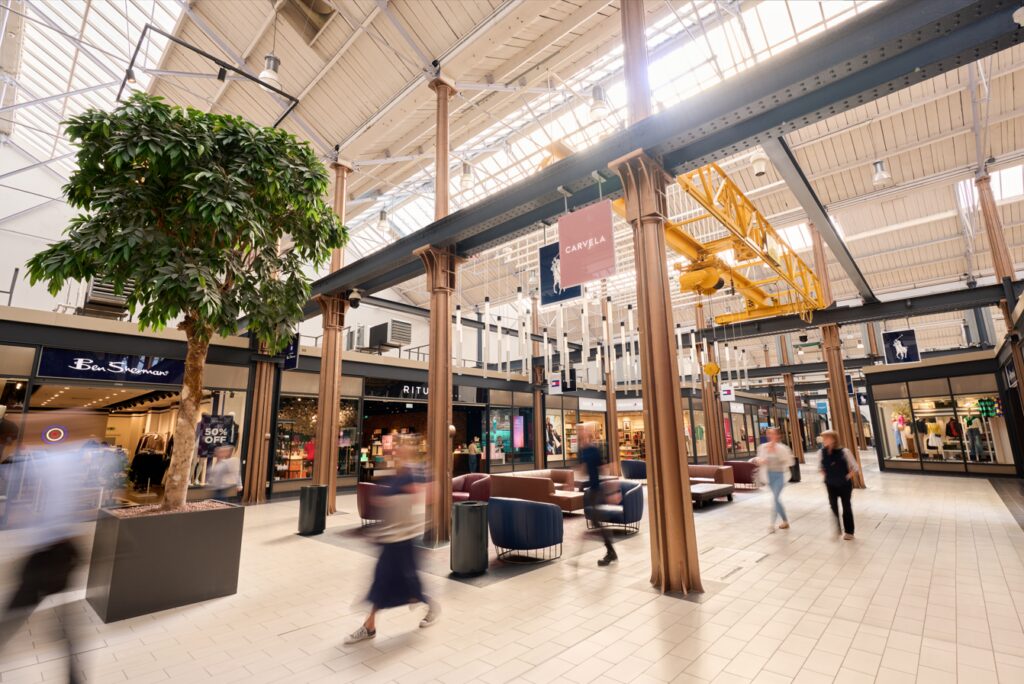
Times of economic difficulty and reduced consumer confidence have traditionally seen consumers tighten their purse strings, occasionally saving up for a larger purchase. But a recent shift in spending patterns suggests that shoppers are now shunning big-ticket purchases in favour of smaller, less expensive products or experiences.
This concept, dubbed ‘treatonomics’, has been observed by Alex Petit, head of research and insights at Global Mutual, within the group’s portfolio of outlet shopping centres.
“What we’ve seen is that cost-of-living crisis, combined with people wanting to keep on treating themselves, means that people are suddenly treating themselves on much smaller price points. That’s what we’re seeing with treatonomics”, she tells Completely Retail News.
Data from the ONS found that despite increasing costs, sales volumes have remained broadly flat against pre-pandemic levels. This implies a shift towards consumers spending money less often, but instead choosing to make select purchases of higher values.
“People are being very considered”, says Petit, “I think it comes from the pandemic as well, when we were all locked at home and we were deprived of a lot of things. People now have a slightly different outlook on life as there’s this hang-up psychologically, from us not being able to go on holiday or to the pub.”
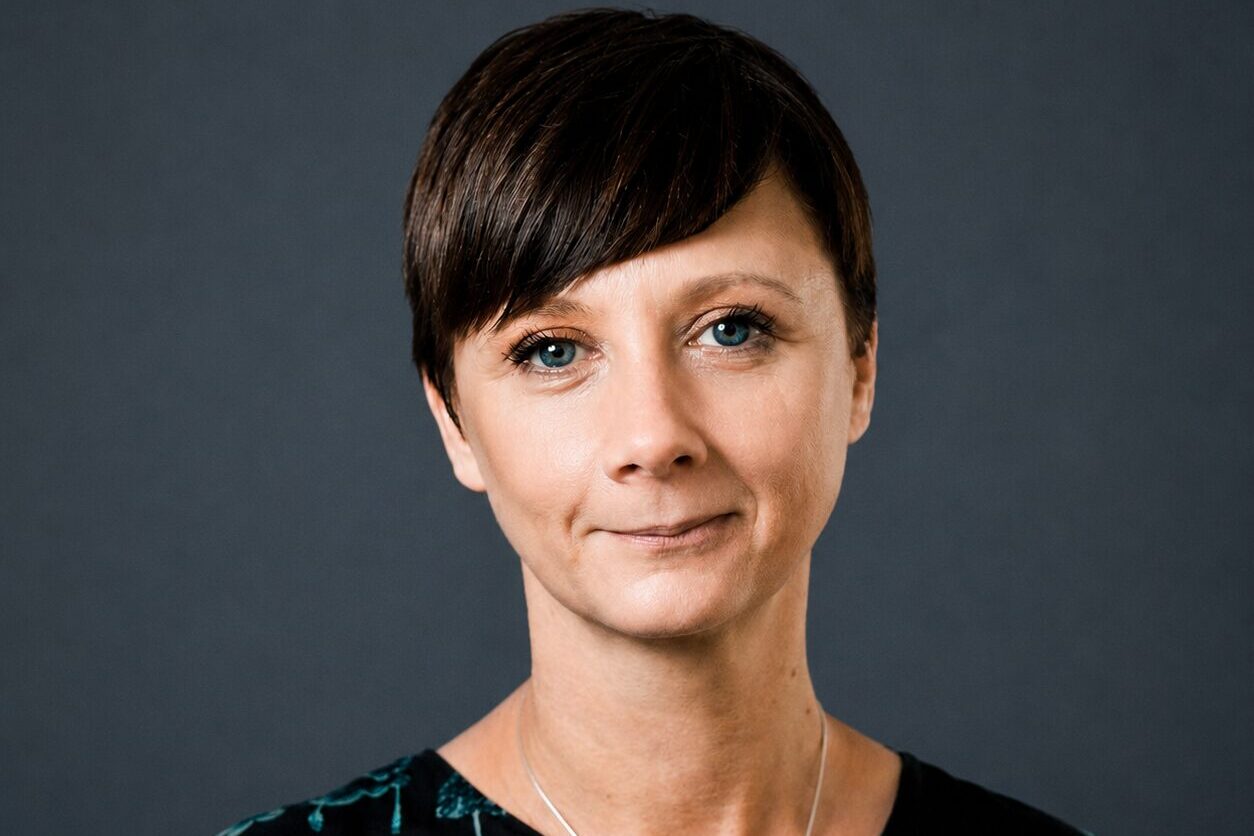
Alex Petit
Across the group’s outlet centres – which include the likes of Frasers Plus Designer Outlet Leeds, the Affinity portfolio (comprising Affinity Lancashire, Affinity Staffordshire, Affinity Sterling Mills and Affinity Devon), and Frasers Plus Designer Outlet in Swindon – Global Mutual makes use of anonymised, GDPR-compliant banking transaction data to understand shoppers’ journeys and behaviour:
“Three years ago, about 25% of all transaction values were under £40, and it’s still the case today”, says Petit, “at £40 there’s still an element of treats. When you think of outlets you think of a big day out, splashing on fashion, it’s not true. People use outlets quite regularly to do a bit of beauty shopping, or F&B or treating the kids.
“It’s quite interesting how retailers have tailored their package to reflect this change with people wanting to spend slightly less.”
The rise of treatonomics has also been brought about by an increasing involvement of social media within people’s lives. According to polling by the Retail Technology Show, 46% of UK shoppers engage with a brand physically after engaging on social media. This number jumps to 69% for Gen Z and 68% for Millenials.
The prevalence of social media has had a marked effect on how and where people spend their money, says Petit:
“People post their lives on social media and want to engage in trends as well. Through your social media you will know what is out or in and you want to experience everything that’s available to you in your world. The world is fast-changing.
“This really translates into people treating themselves on small prices. We’ve seen this for example on what we literally call ‘treats’ in the F&B categories. We’ve seen less spend on sit-down meals, but more spend on sweet treats and drinks. A lot of F&B operators are really good at not only capturing the brand but realising that your product needs to be really social media-friendly. A lot of those products are colourful and photograph really well. We’ve seen this in health and beauty, it’s what was called the ‘lipstick effect’ in the past; it’s here to stay for sure.”

Affinity Sterling Mills
Petit also highlights other sectors that have benefitted from changing consumer patterns:
“In 2019, in most outlets we didn’t have leisure operators. It was a category we simply didn’t have outside of cinemas. Whereas now you will see all kinds of activities. It’s a new category in outlets that historically wasn’t required.
“Gifting and toys is another interesting category, because in outlet history we traditionally wouldn’t have toy retailers, it’s more common in Europe. We now have The Entertainer which has opened in Frasers Plus Designer Outlet in Leeds, where we tend to have a lot of families visiting, which is why the introduction of toy retailers makes so much sense.
“Another successful retailer is The Works, which is sometimes an unsung hero. It may not be the most glamourous retailer but they’ve been incredibly good at capturing customers. If you want to treat yourself for say, £10, you can get something to keep the kids entertained and happy for a little while.”
This shift is reflected in sales data recorded across the Global Mutual outlet portfolio. In 2019, the fashion made up 72% of all total sales, this number has declined to 69% with the health and beauty, gifting, F&B and leisure categories all increasing their shares significantly.
When it comes to making the most of ‘treatonomics’, Petit says that Global Mutual have made use of social media to promote various events within the group’s portfolio:
“Recently, in a world where you have to be careful about the pennies, we launched a campaign based on what you can get as a free treat on your birthday. We’ve seen these being really successful for us. It’s good at featuring the brands we have. We shouldn’t see social media as a competitor, it’s really an enabler to people coming into our outlets and destinations.
“The other part we’ve seen is around experience. In a world where we are quite cost-conscious, outlets are great you know you are going to get all-year-round promotions and discounts. This is where the social media can heighten the demand for experience and this is where we can do a lot of seasonal events and activations.”
Petit says that Global Mutual can then make use of its data to track how these events have affected the group’s sales performance within its schemes. A recent series of leisure-led events across the Affinity Portfolio led to a 252% increase in sales and an 88% uplift in footfall over the May Bank Holiday weekend.
“As a landlord we need to make sure that every brand benefits”, says Petit, “it’s not just the F&B brands for example, so we always make sure we track how well the brand is performing across those events because we need to make sure it’s beneficial to all.”
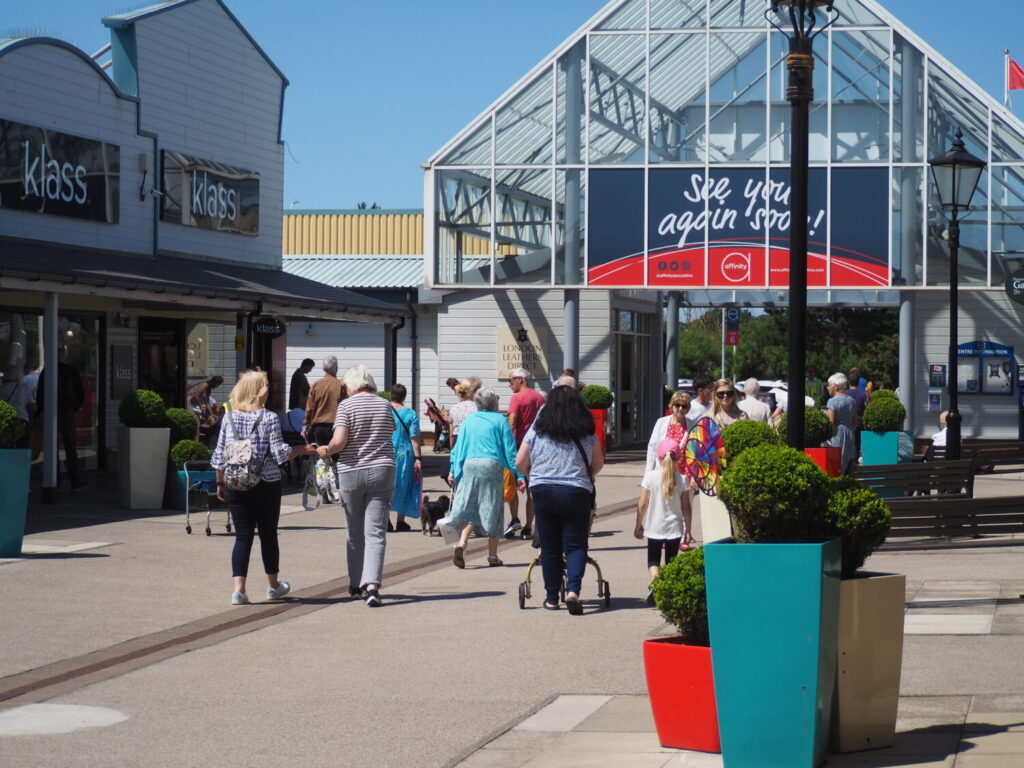
Affinity Lancashire
As for whether this trend of ‘treatonomics’ is expected to continue, Petit says this year’s scorching weather may play a part:
“In retail we love to blame the weather, when it’s too hot or cold, too windy or too rainy et cetera. This is where we are quite lucky across the portfolio, we have a mix of open-air and covered destinations. What we’ve found is there is almost an optimal temperature in each destination, even the cold. If it’s too cold, some of the open-air destinations in winter can struggle a bit, but when it’s too hot it’s the same thing as well.”
However, other factors may come into play which would affect spending patterns, such as this year’s FIFA World Cup which is drawing consumers back to the pub.
“We may have a golden effect if England keeps progressing through the World Cup. We know this has a very positive effect on food and beverage as a category.
“There’s been a lot of studies in countries that have won a World Cup, being French I’ve looked into this! The economy rebounded, and you have a couple of months where people are very positive. I hope football is coming home, we could have a great summer.”