Comment: How retailers are nailing Christmas 2025

By Kathryn Evans, senior surveyor at LM
Christmas remains the most critical trading period in the UK retail calendar, with shoppers expected to spend £91 billion this year – a 3.2% rise on 2024. Despite wider economic unease and ongoing scrutiny of the government’s budget, the UK is still on track to outperform every major European market, with 2025 sales forecast to sit 21.8% above Germany, the next closest nation. For many retailers, the festive period is crucial in determining their annual performance.
CACI data recently revealed that popular sectors driven by social media are set to perform particularly well, with retailers like Popmart and MINISO benefiting from the booming demand for blind boxes and collectibles. Beauty continues to surge too, with PURESEOUL and Space NK reporting strong year-on-year growth.
However, while product trends matter, retailers must fully commit to the festive season to ensure they benefit from this critical trading period.
In-store experiences driving customer visits
In-store experiences are becoming increasingly vital as they offer the chance to provide emotional connection, immersion, and memorability: something online shopping cannot replicate. Immersive shopping environments drive brand loyalty, increase dwell time, and boost conversion rates. The retailers who do this best offer ‘social media-ready’ moments that boost organic engagement and have an incredible impact.
John Lewis’s first 7,000 sq ft ‘Gifting Emporium’ in Bluewater has successfully curated an interactive area for gift shopping, focusing on a positive experience for the present buyer, not just the recipient.
Holland & Barrett has harnessed the power of the wellness shift which is showing no sign of slowing down. The brand’s Cardiff store recently opened their new immersive wellness studios including health checks, biological age testing, and free consultations hubs. Tapping into seasonal trends, the store launched SAD-light “sunshine booths” in November this year, addressing ‘seasonal affective disorder’ a key issue faced by many wellness-conscious shoppers.
Lush’s Liverpool Christmas Cabin, which includes bath bomb making and an educational trail, highlights how clever seasonal initiatives can enliven high streets and reinforce localism and relatability to the city. Backed by Liverpool’s Business Improvement District (BID), it supports local communities and charities while promoting the Lush brand, driving visitors in-store and building customer loyalty.
Even smaller-format initiatives are proving effective. Haribo’s Bluewater store uses its 3D photo booth and exclusive international ranges as an approach to boost footfall, while Charlotte Tilbury’s Covent Garden store blends glamour with personal make-up stations that support confident gifting decisions.
The power of colour, display, and instant visual impact
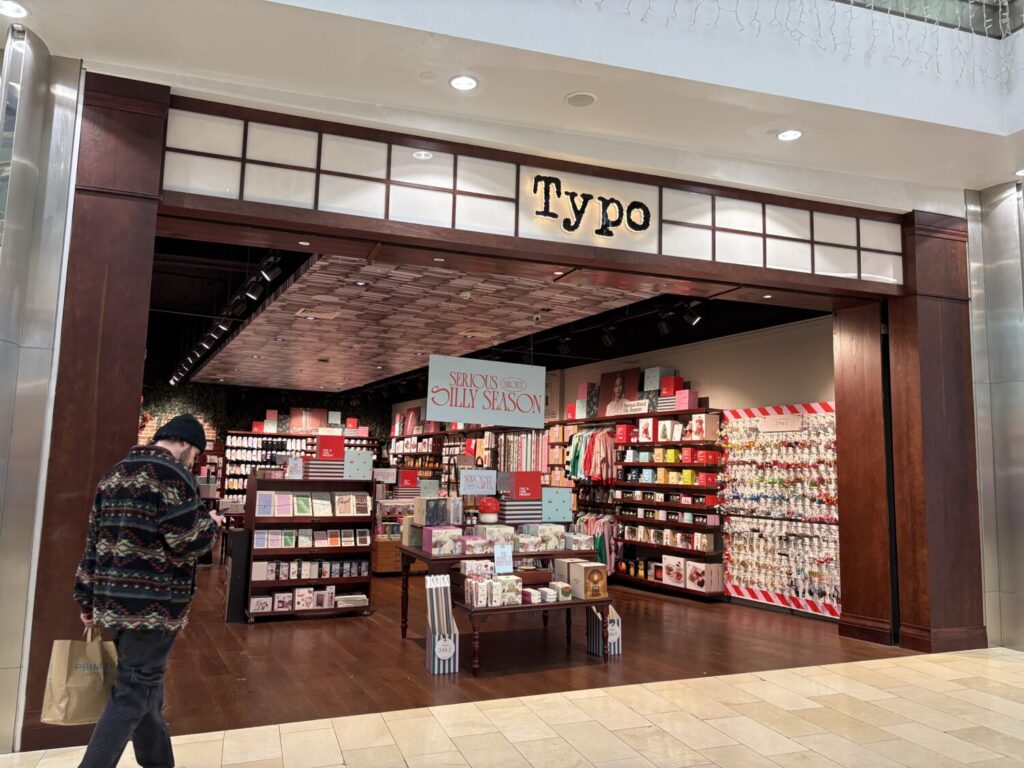
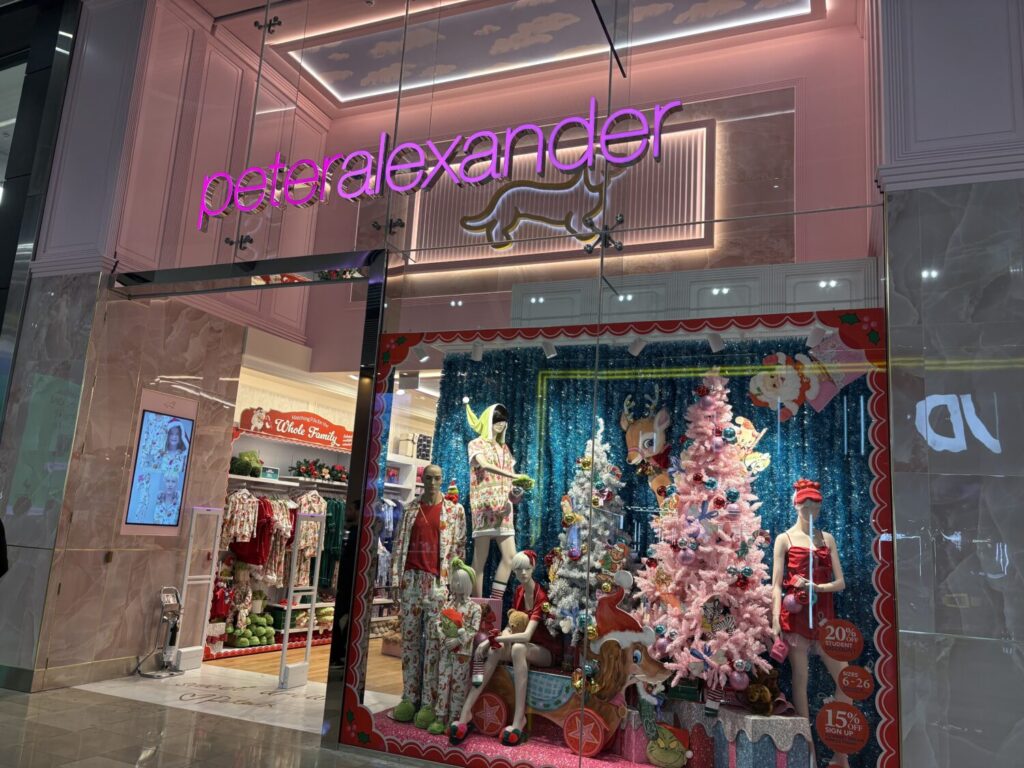
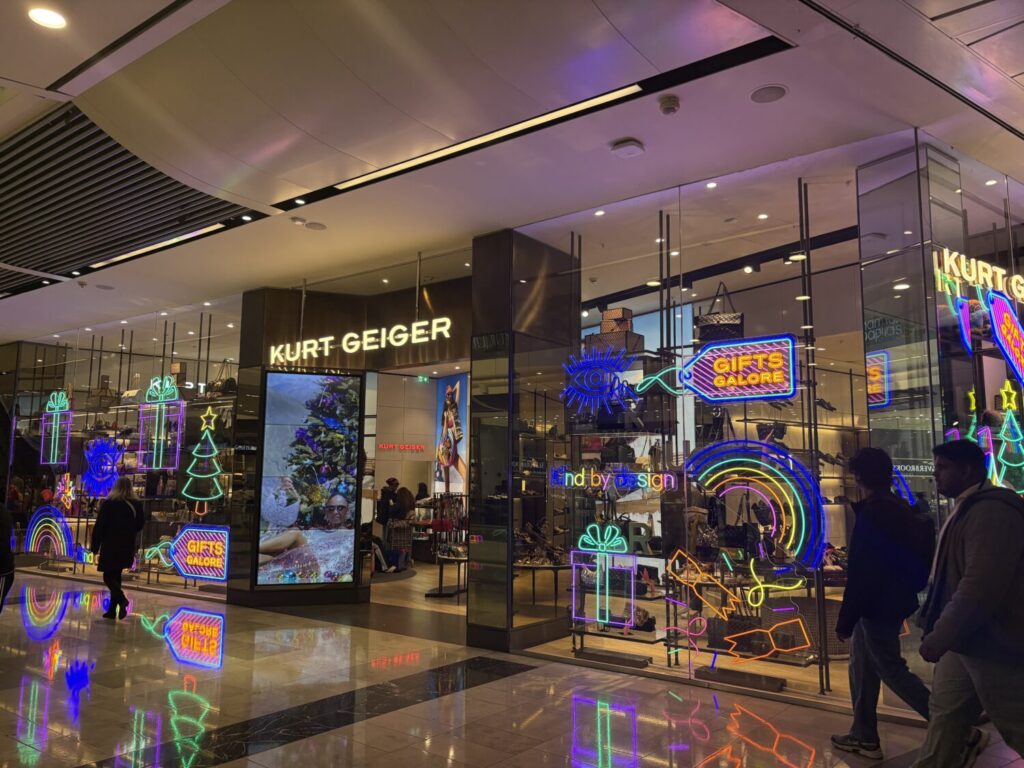
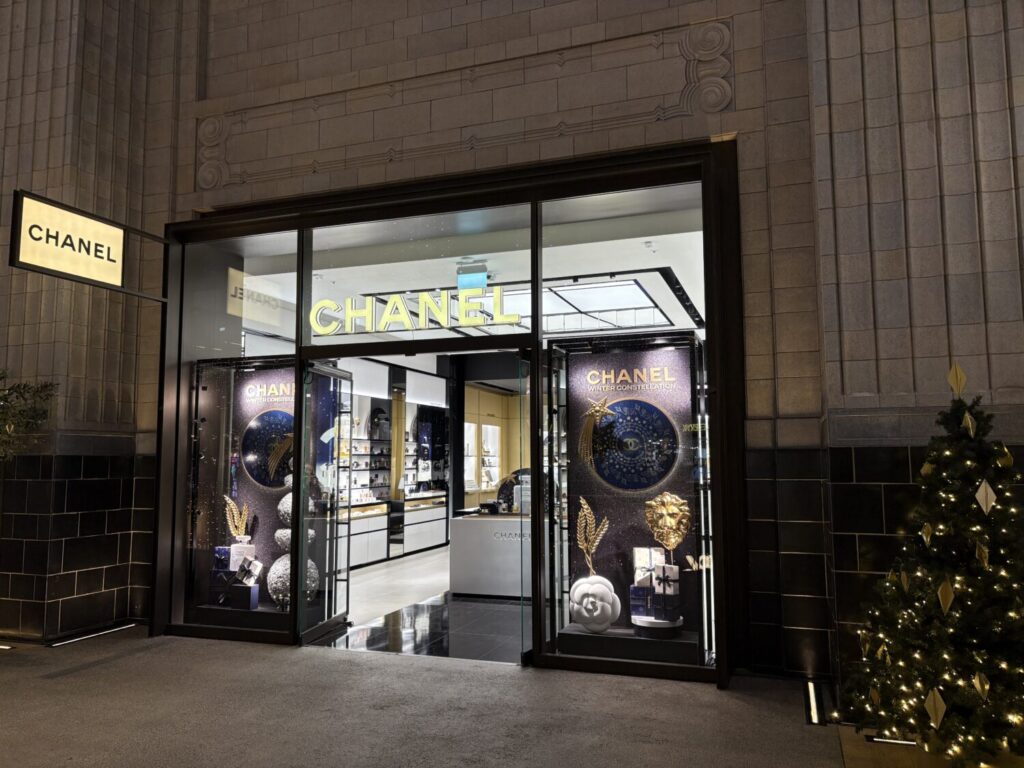
A collection of Christmas displays
Iconic landmark displays from the likes of Fortnum & Mason, Liberty’s, and Selfridges draw in huge crowds of locals and tourists year-on-year, however even high street brands still have the opportunity to dazzle customers with smaller-scale designs.
Research shows that brands with well-designed displays noticed dwell time increasing by up to 14%. A recent report from Modern Retail also noted that colour alone can drive 62–90% of a customer’s first impressions, emphasising just how powerful these tools can be for retailers during the festive period. Eye-catching displays can attract new customers whilst reinforcing brand identity and boost conversion rates.
A few noticeable examples this year range from bold to beautifully understated. Kurt Geiger’s illuminated Christmas decorations at Westfield Stratford create punchy, high-impact visibility. Peter Alexander’s colourful, product-led Christmas backdrop effortlessly speaks to its festive audience. Meanwhile, Chanel’s refined and muted scheme at Battersea Power Station provides that premium yet effective approach. Brands such as Typo and Søstrene Grene show how more delicately curated and inviting homely touches can be equally compelling to customers.
Christmas TV Advertising: Still the Emotional Heart of the Season
Despite their high cost, Christmas TV advertising has become a crucial commercial and cultural moment for retailers. John Lewis continues to set the benchmark this year with their heartfelt father-son themed ad; but between 2010 and 2019, its Christmas ads generated an estimated £1.2 billion in incremental sales with an ROI of up to £10 for every £1 spent.
Interestingly, 2025 has also seen less predictable retailers score highly for their more pared back but impactful ads. The Perfume Shop’s campaign highlighting customer service and tricky gifting briefs resonated strongly. White Stuff surprised many with its charity-focused rescue-dog story, placing fourth in Retail Week’s rankings and demonstrating that emotional connection doesn’t always require blockbuster budgets.
| Brand | Campaign | Year | Sales impact |
| John Lewis | The Bear and the Hare | 2013 | £734m total festive sales, 6.9% LFL uplift; 97% sell-through on themed merchandise |
| John Lewis | Monty the Penguin | 2014 | 4.8% profit increase; 48,000 plush toys sold |
| John Lewis | Buster the Boxer | 2016 | 2.7% LFL uplift in final six weeks of the year |
| Majestic Wine | There’s a Story Behind Every Glass | 2023 | 8.1% sales jump; 63,000 new customers, and sustained 27% uplift post-holiday |
| Aldi | Kevin the Carrot | 2016-present | 15.1% sales uplift; 1 million new shoppers |
| H&M | Come Together | 2016 | 6% YoY growth indirectly linked to campaign |
| Sainsbury’s | 1914 | 2014 | Critically acclaimed, producing £24 profit return for every £1 spent |
| Coca-Cola | Holidays Are Coming | Ongoing | Helped deliver 36% sales growth in 2021 |
1
Brand collaborations: a festive formula for reach and relevance
Christmas collaborations have become a powerful tool for expanding reach, tapping into new audiences, and creating buzz around limited-edition ranges. Research shows that co-branded promotions can increase purchase intent by up to 30% and drive footfall by 15–20%.
This year’s standout partnerships include Barbour x Wallace & Gromit, which blends British heritage with animated charm. Primark’s ongoing partnership with The Grinch has been expanded into its biggest collection yet, even supported by themed in-store cafés. John Lewis has reintroduced Topshop to bricks-and-mortar with selected pop-ups, capitalising on Millennial nostalgia. And with the release of Wicked: For Good, retailers from M&S to Greggs have jumped on the cultural moment, proving just how widely pop-culture licensing can be deployed.
Promotions and Black Friday
Black Friday continues to shape consumer spending habits, with 2024 spend exceeding £3.1 billion in the UK. This year, retailers have launched promotions earlier and extended them longer, hoping to capture value-conscious consumers which has seemingly had an impact on October-November sales.
With savvy shoppers becoming increasingly aware that the promoted discounts may not be as good as they seem, the strongest performers have focused on trust and convenience. Argos initiated its Black Friday guarantee, M&S focused on selected fashion and beauty discounts, and JD Sports pushed value across core categories to drive both online and in-store sales.
Alternatively, The White Company and B&Q have focused on convenience-led promotional schemes by partnering with rapid-delivery services Zapp and Deliveroo to provide on-demand delivery for their customers in need of speedy gifting or DIY solutions.
Christmas may be seen by some as over-commercialised, but for retailers navigating economic uncertainty, it is also a vital lifeline. When festive campaigns are thoughtful, on-brand, and customer-centric, they can showcase creativity, strengthen loyalty, and generate much-needed revenue.
The importance of successful Christmas trading has also not gone unnoticed by landlords with the likes of Landsec, Hammerson, and Unibail-Rodamco-Westfield spending significant amounts on elaborate decorations, markets, Santa’s Grottos and even ice-skating rinks in their shopping centres. LM’s offices are located in Covent Garden where we can see the impact of Shaftesbury Capital’s investment into this, solidifying Covent Garden as a must-go Christmas destination.
The retailers winning Christmas 2025 are those who understand that success lies in memorable, meaningful, and measurable engagement. If executed well, the festive period doesn’t just boost seasonal sales, it builds strong foundations for stability and growth in the retail industry.
1Source: Be The Fox – Famous Christmas Ads Results: What Made the Work? University of Sussex – How John Lewis won the battle of the Christmas ads, Modern Retail – Most Successful Christmas ads unveiled, Marketing Week – The 5 most memorable John Lewis ads, Optix Solutions – Are Christmas Ads Still an Effective Marketing Strategy? Eskimi – The top 7 Christmas video ads of all time